
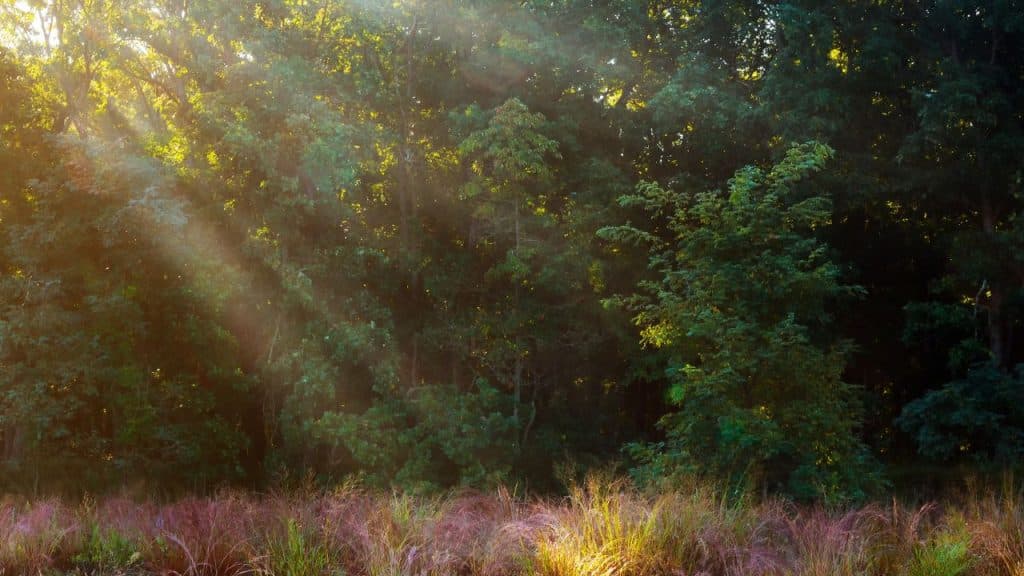
There’s a light some of us have been following our whole lives.
It’s the thing that won’t let you accept that this is just how learning has to be.
It pulls you toward the question underneath the question: not how do we manage these children, but how do humans actually learn — and what have we forgotten?
For me, the light led first into academia. Into the research, the neuroscience, the long study of what we teach children and how.
It shined through restorative justice, culturally responsive pedagogy, healing-centered practice, social-emotional learning, nature, Indigenous knowledge systems, the ancient wisdoms.
Then it led back into the classroom — because a teaching only becomes true once it’s tested in practice, in the body, in the room.
And in the room, it came alive.
In the way eighth graders found their footing in their own voices.
In the way conflict became conversation instead of punishment. In the way a young person, met as whole, started to trust themselves.
The same light showed the other thing too — the harder thing.
That the systems shaping how schools operate were built on a history of severance.
Colonized education trains for compliance over curiosity, separation over community, assimilation over authenticity. It teaches us to disconnect — from ourselves, each other, our lineages, the land.
Our learning spaces, modeled on prisons.
Our wellbeing spaces, modeled on corporations.
No more. No más.
There’s an African proverb that holds the whole stakes of it: a child not raised by the village will burn it down to feel its warmth.
To meet this moment, the light asked to be expressed differently.
Not as critique.
As a path — out of the old paradigms of knowing, being, and doing, toward something older and truer.
The light wanted to ground.
To settle, grow roots, live in a home where it could be seen and tended and listened to.
And so it did.
The light became a body of work, and the work needed a name.
Liberated Learning.
Here’s what it looks like when the light has a home.
In most classrooms, a child bounces their leg and gets told to sit still, focus, stop being disruptive.
In a Liberated Learning space, that same child is invited to notice what their body needs — movement, something to hold, a walk outside.
The learning doesn’t stop because the body moved. The body is how we learn.
When someone messes up — hurts a feeling, breaks a trust — connection comes before consequence.
The community circles up. Voices have room. People practice listening, repairing, returning.
We learn that we can make mistakes and still belong.
None of this is new.
These are the pathways humans have used for millennia — learning in circles, through curiosity, held by community.
The light isn’t inventing. It’s remembering.
From here, the story stops being about one person following one light.
Because a light that grounds into a home doesn’t stay one person’s.
It becomes a fire the whole village gathers around.
Liberated Learning is an ecosystem for education as village restoration.
Learning spaces where nature and community are centered.
Where every person’s genius and purpose is honored.
Where intergenerational connection is the ground, not the garnish.
Where young people learn by doing, by participating, by building.
Where we remember we were never meant to do any of this alone.
The model is flexible, holistic, rooted in ancient wisdom about how humans actually thrive together.
It adapts to each community’s needs while holding its core — love, respect, curiosity, unity, and the values each community chooses for itself.
Liberated Learning is connective tissue.
The thread that runs between people who already know, in their bodies, that another way is possible.
So the question is no longer what did she build.
The question is what do we tend, together.
The light is still growing, and it’s seeking:
Stewards who live these ways in everyday practice, not as theory but as how they move through a room.
Community gathering around the remembering.
Hands willing to help the work grow.
This is for the educators who feel the harm in the system and want to be part of the way through.
For the parents who want something liberating for their children.
For the healers, organizers, and dreamers who already sense that another way is real.
The village isn’t a metaphor here. It’s the people who show up to tend the fire.
And how well we tend the light together is how well we’ll be able to show up for liberation.
The lighthouses are forming.
The village is rising.
You’re already part of it, or you wouldn’t have read this far.
